Aligning Payment Records With Dynamic Loyalty Structures During Mobile Live Dealer Play
Written by Kai Friedrich · Jun 4, 2026

Aligning Payment Records With Dynamic Loyalty Structures During Mobile Live Dealer Play
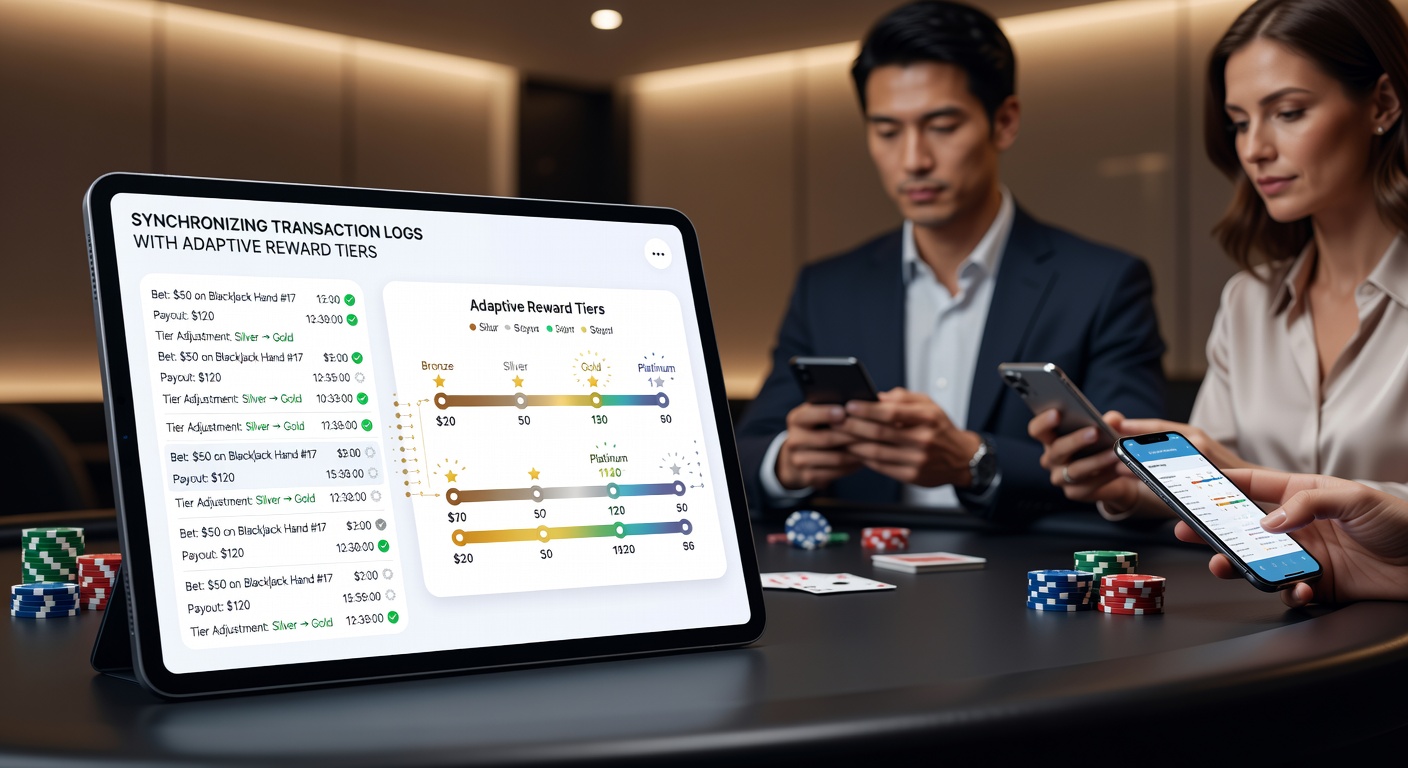
Systems that connect transaction logs directly to adaptive reward tiers operate by pulling real-time data from smartphone-based live table sessions and feeding it into tier-adjustment algorithms, and these processes allow platforms to update player status without manual intervention while maintaining accuracy across multiple concurrent games. Developers build these connections through secure APIs that capture each bet, win, and withdrawal event as it occurs, then route the information to backend servers where reward calculations run continuously.
Core Technical Integration
Transaction logs record every financial movement with timestamps, game identifiers, and device details, whereas adaptive reward tiers respond to cumulative activity by shifting players between levels such as bronze, silver, gold, and platinum based on predefined thresholds that update automatically. Engineers achieve synchronization by using event-driven architectures where each completed transaction triggers an immediate check against current tier criteria, and databases store both the raw logs and the resulting tier changes in linked tables so queries can retrieve consistent histories. Studies from research institutions show that latency under 200 milliseconds keeps the experience seamless for users engaged in live dealer blackjack or roulette on mobile devices.
Platforms often employ cloud-based services to handle peak loads during evening hours when live table traffic spikes, and these services scale resources automatically while preserving data integrity through redundant logging. Observers note that encryption protocols protect sensitive payment details during transfer between the mobile app and central servers, satisfying requirements set by various regional regulators.
Implementation Patterns Across Markets
Operators in North America and Europe have rolled out comparable frameworks, with one documented case involving a Canadian platform that linked its transaction stream to a machine-learning model capable of recalibrating reward multipliers every fifteen minutes according to session length and average bet size. Data from the Ontario Lottery and Gaming Corporation indicates that such synchronization reduced manual adjustment requests by 47 percent within the first quarter after deployment. Meanwhile, developers in Australia tested similar logic during high-volume periods, confirming that adaptive tiers maintained fairness when transaction volumes exceeded 10,000 events per hour.
In June 2026 several providers plan additional updates that incorporate biometric authentication into the logging process, allowing reward tiers to reflect verified user identity alongside financial activity. These enhancements aim to reduce discrepancies that occasionally arise when multiple devices access the same account during live sessions.
Regulatory and Security Considerations
Regulatory bodies require detailed audit trails that link every transaction to its corresponding tier change, and compliance teams generate reports that demonstrate how algorithms apply rules consistently. The New Jersey Division of Gaming Enforcement has published guidelines emphasizing that synchronization mechanisms must withstand third-party penetration testing, while academic papers from European universities highlight the value of transparent rule sets so players can understand why their status shifts after particular sequences of play. Security teams monitor for anomalies such as rapid tier jumps that might indicate manipulation attempts, responding with automated flags that freeze further adjustments until manual review occurs.
Payment processors integrate their systems through standardized interfaces that pass confirmation codes back into the logging layer, ensuring reward calculations only proceed after funds have cleared. Industry associations report that these coordinated flows decrease payout disputes because both financial records and loyalty status draw from the same authoritative dataset.
Future Developments and Monitoring
Engineers continue refining predictive components that anticipate tier changes before transactions finalize, using historical patterns to pre-calculate potential reward impacts. Such forward-looking adjustments require careful calibration to avoid over-promising benefits that later fail to materialize due to session interruptions. Platforms track key performance metrics including synchronization success rate, average time to tier update, and player retention following status changes, feeding these figures into iterative improvements.
Conclusion
Effective synchronization of transaction logs with adaptive reward tiers rests on reliable data pipelines, secure processing, and regulatory alignment that together support smartphone-based live table operations. Continued refinements scheduled through 2026 and beyond will likely expand the precision of these systems while preserving the auditability demanded by oversight agencies across multiple jurisdictions.