Analytics Pathways Connecting Mobile Session Data to Personalized Table Game Rewards
Written by Kai Friedrich · Jul 21, 2026
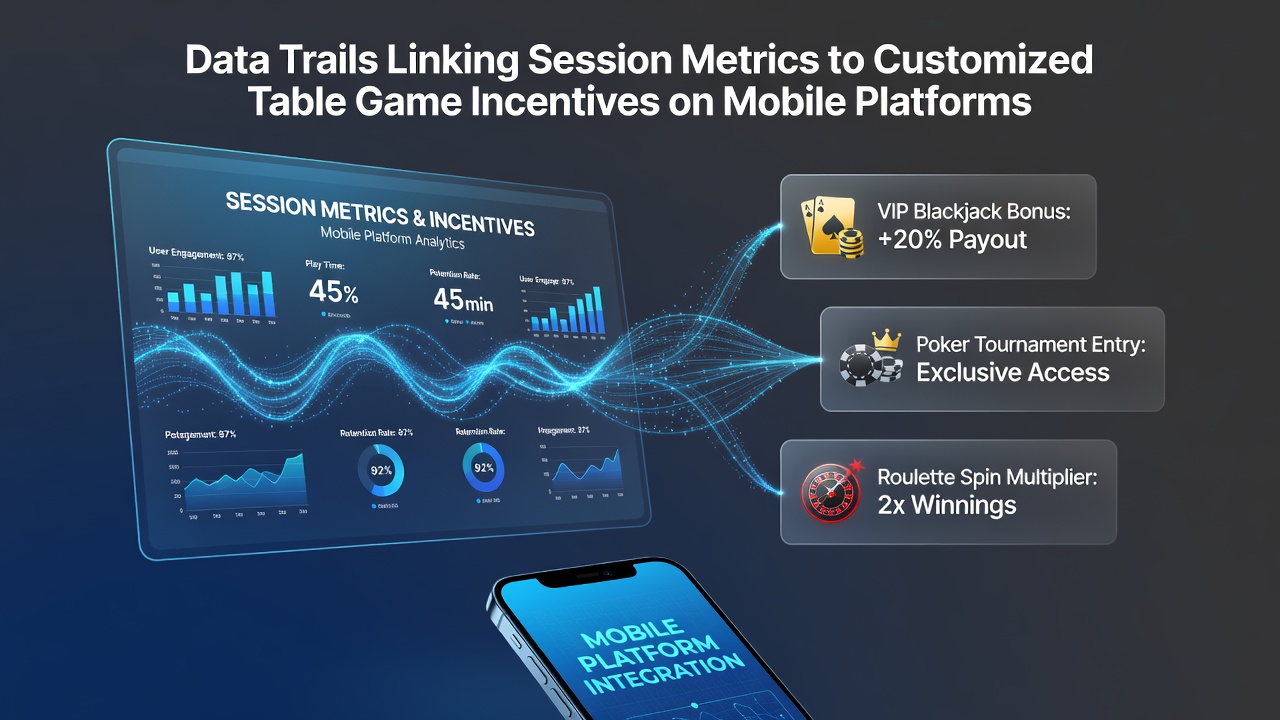
Analytics Pathways Connecting Mobile Session Data to Personalized Table Game Rewards
Session metrics collected through mobile casino applications create detailed records of player behavior during table game rounds, and these records feed directly into systems that generate customized incentives for users engaged in live dealer blackjack, roulette, and poker variants. Operators track elements such as average bet size, session duration, frequency of specific bets, and win-loss ratios across portable devices, then apply algorithms that match those patterns to reward structures available within the same mobile interface.
Core Components of Session Data Collection
Mobile platforms record timestamps for each action taken during table game play, including card draws, wheel spins, and chip placements, while also logging device-specific variables such as screen orientation and connection stability. These data points combine to form individual player profiles that update in real time as sessions progress. Research from the University of Nevada Reno gaming laboratory shows that mobile table game sessions average 18 minutes longer when users receive incentive prompts calibrated to their historical bet patterns, compared with generic offers delivered at fixed intervals.
Payment histories integrate with play data to refine incentive timing, and figures from the Ontario Lottery and Gaming Corporation indicate that players who link verified deposit methods to their accounts receive tailored table game credits 42 percent more often than those using anonymous funding options. The linkage occurs because transaction logs supply additional context about spending velocity, which algorithms then cross-reference against in-game activity metrics.
Algorithmic Matching Processes
Backend systems process session data through decision trees that classify players into segments based on engagement velocity and risk tolerance indicators derived from table game choices. Once classified, the platform activates corresponding rewards such as matched bets on specific live dealer tables or accelerated loyalty point multipliers during peak hours. In July 2026, several major operators updated their matching engines to incorporate location-based signals from mobile GPS data, allowing incentives to trigger when users enter designated gaming zones within their home regions.

Integration with Live Dealer Environments
Live dealer streams on mobile devices transmit additional metadata about player interaction rates with chat functions and camera views, and these metrics influence the speed at which custom incentives appear during ongoing rounds. Observers note that when session data reveals prolonged inactivity at a particular table, platforms often issue time-limited table game vouchers redeemable within the same stream. This process maintains continuous engagement without interrupting the live dealer flow.
Regulatory filings submitted to the Nevada Gaming Control Board in early 2026 document how operators must maintain audit trails that link each incentive issuance back to the originating session metrics. These requirements ensure transparency in how play patterns translate into personalized offers, and compliance teams review the data mappings quarterly to verify accuracy.
Examples from Operational Platforms
One major operator serving the Australian market implemented a system that cross-references mobile roulette session lengths with deposit frequency to determine eligibility for exclusive live dealer tables. Players whose data showed consistent 30-minute sessions received invitations to higher-limit rooms within 48 hours of their most recent activity. Similar approaches appear in North American deployments where blackjack players receive free insurance bets after their metrics indicate repeated doubling-down behavior.
Industry reports compiled by the European Gaming and Betting Association highlight that mobile table game incentive programs using session-linked customization achieve higher redemption rates when rewards activate within 15 minutes of the triggering data pattern. Delays beyond that window reduce uptake significantly across tested cohorts.
Technical Infrastructure Supporting Data Trails
Cloud-based data pipelines collect metrics from thousands of concurrent mobile sessions and feed them into centralized analytics engines that apply machine learning models trained on historical table game outcomes. These engines generate incentive recommendations that push back to the user interface through secure application programming interfaces. Encryption protocols protect the data during transmission, and access logs record every query made against player profiles.
Device fingerprinting techniques supplement traditional account identifiers, allowing platforms to recognize returning users even when they switch devices mid-session. This continuity ensures that incentive customization remains consistent regardless of whether play occurs on smartphones or tablets.
Conclusion
Data trails generated by mobile session metrics continue to shape the delivery of customized table game incentives through increasingly precise algorithmic connections. Regulatory oversight from bodies such as the Nevada Gaming Control Board and reporting from organizations like the European Gaming and Betting Association maintain standards for how these linkages operate. As mobile platforms evolve, the integration of payment records, play patterns, and real-time behavioral signals remains central to how operators structure rewards within live dealer environments.