Geofencing Mechanisms Shaping Access to Localized Table Game Versions in Mobile Apps
Written by Iris Krüger · Aug 6, 2026

Geofencing Mechanisms Shaping Access to Localized Table Game Versions in Mobile Apps
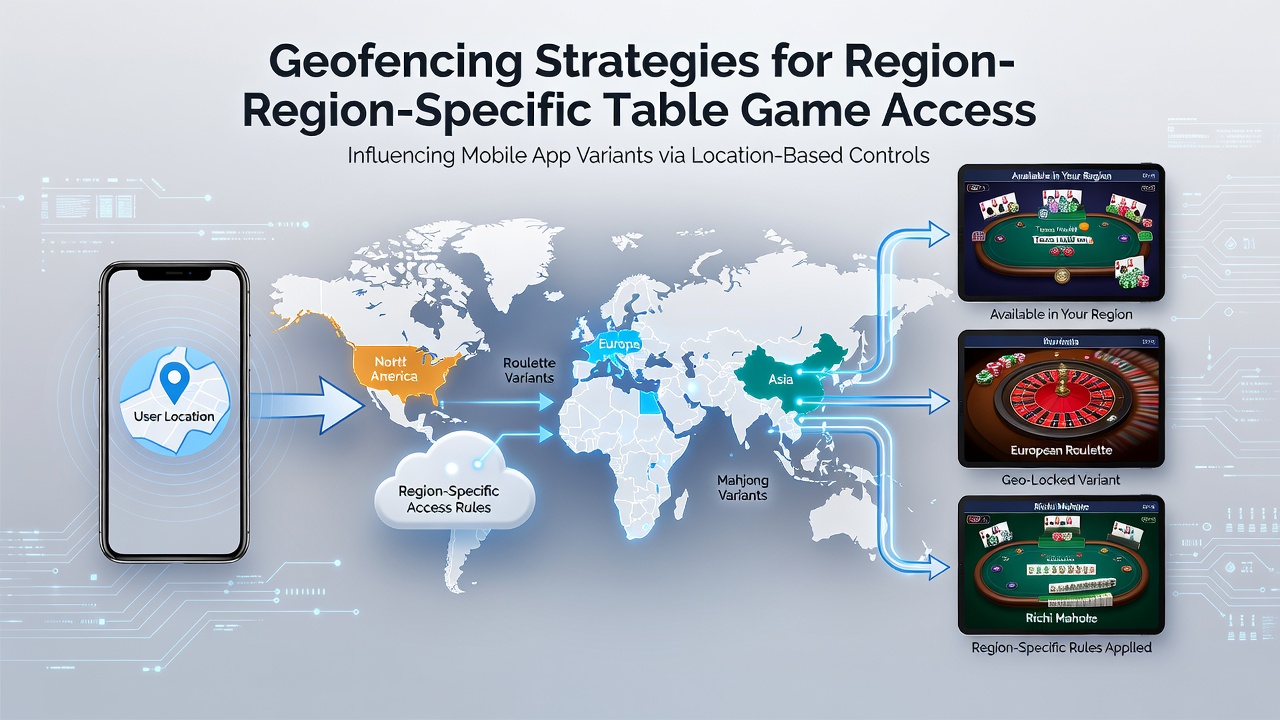
Geofencing relies on GPS, WiFi, and cellular data to establish virtual perimeters that mobile applications use to verify user location before granting entry to specific table game libraries, and developers integrate these boundaries with regulatory databases so that only approved variants appear on screen once a device crosses into an authorized zone. Research from multiple jurisdictions shows that this approach prevents users from accessing game versions prohibited in their current area while allowing seamless switches when players travel across state or national lines.
Technical Implementation of Location Verification
Developers combine real-time positioning signals with encrypted tokens that update every few seconds, which means an app can detect when a user moves from one regulatory area into another and immediately swap the available blackjack payout structures or roulette wheel configurations without requiring a full restart. Those who have examined the codebases note that fallback checks using multiple data sources reduce false positives during signal interference, yet the system still blocks play if any single verification layer fails to confirm the required coordinates.
Regulatory Drivers Behind Variant Restrictions
State and provincial laws often mandate distinct rule sets for table games, such as limiting side bets in certain Pennsylvania markets while permitting them in neighboring jurisdictions, and geofencing enforces these differences by loading only the compliant asset packs. Data from the Pennsylvania Gaming Control Board indicates that location-based filtering reduced unauthorized game exposures by significant margins during the first full year of expanded mobile deployment, while similar patterns appear in reports issued by the Alcohol and Gaming Commission of Ontario.
Operators maintain separate game servers for each approved region, and the mobile client queries these servers only after the geofence confirms eligibility, which keeps the experience consistent for users yet compliant with local statutes that evolve over time.
Case Examples Across Multiple Markets
One documented deployment in Nevada allows American roulette variants with the double-zero wheel while the same app switches to single-zero European rules once the device registers coordinates inside New Jersey borders, and similar logic applies to poker hand-ranking preferences in Canadian provinces versus U.S. tribal lands. Observers tracking these rollouts report that update cycles now occur automatically when new regulations take effect, reducing the need for manual app store submissions each time a jurisdiction modifies its approved list.
Integration with Player Account Systems
Account profiles store preferred game settings, yet the geofence layer overrides those preferences whenever location data dictates a different variant must display, which prevents conflicts between user history and current legal requirements. Studies conducted by academic teams at institutions tracking digital gambling interfaces have measured reduced support tickets related to missing game options after operators strengthened their boundary detection algorithms.
August 2026 marks the scheduled rollout of updated geofencing protocols in several additional U.S. states that recently authorized mobile table games, and preliminary testing shows faster location confirmation times alongside stricter handling of border areas near rivers or state lines where signal overlap occurs frequently.
Security and Compliance Considerations
Encryption of location data occurs before transmission to central servers, and independent audits verify that no persistent logs retain precise coordinates beyond the minimum needed for regulatory reporting. Industry associations such as the American Gaming Association have published guidelines that operators follow when calibrating sensitivity thresholds to avoid over-blocking legitimate play near approved venues.
Conclusion
Geofencing continues to serve as the primary mechanism for matching mobile table game offerings with regional authorizations, and ongoing refinements in positioning accuracy support broader expansion into new markets without compromising compliance standards. Operators that maintain robust multi-signal verification report smoother user transitions across boundaries while meeting the distinct rule sets required by each licensing authority.