Integrating Payment Histories with Evolving Incentive Frameworks in Mobile Casino Platforms
Written by Yves Baumann · Aug 27, 2026

Integrating Payment Histories with Evolving Incentive Frameworks in Mobile Casino Platforms
Smartphone casino applications now connect detailed transaction records directly to adaptive reward structures that adjust in real time based on player activity patterns. Developers track deposits, withdrawals, and betting volumes through secure databases that feed into machine learning models designed to modify bonus offers, cashback percentages, and loyalty tiers without manual intervention. This integration allows platforms to respond to spending behaviors within seconds of each transaction completing.
Data Collection and Storage Practices
Transaction records begin with encrypted logs captured at the point of payment processing. These logs include timestamps, amounts, payment methods, and session durations, all stored in compliance with data protection standards set by regional authorities. Software engineers route this information into centralized analytics engines that categorize users according to frequency and value of activity. Observers note that such systems handle millions of entries daily across major applications, creating datasets that grow continuously as engagement continues.
Security protocols separate identifiable details from aggregated metrics during initial processing. This separation supports both regulatory audits and internal optimization efforts. Companies maintain these records for periods mandated by licensing agreements, often spanning several years, to enable retrospective analysis of reward effectiveness.
Mechanics of Adaptive Reward Adjustment
Adaptive structures operate through algorithms that recalculate eligibility for promotions after each qualifying transaction. A player completing a series of deposits might receive an immediate increase in match bonuses, whereas reduced activity could trigger targeted retention offers. These calculations draw from historical patterns stored in the same databases holding current transaction data. Researchers have documented how platforms test multiple reward variants simultaneously to determine which configurations produce higher retention rates across different user segments.
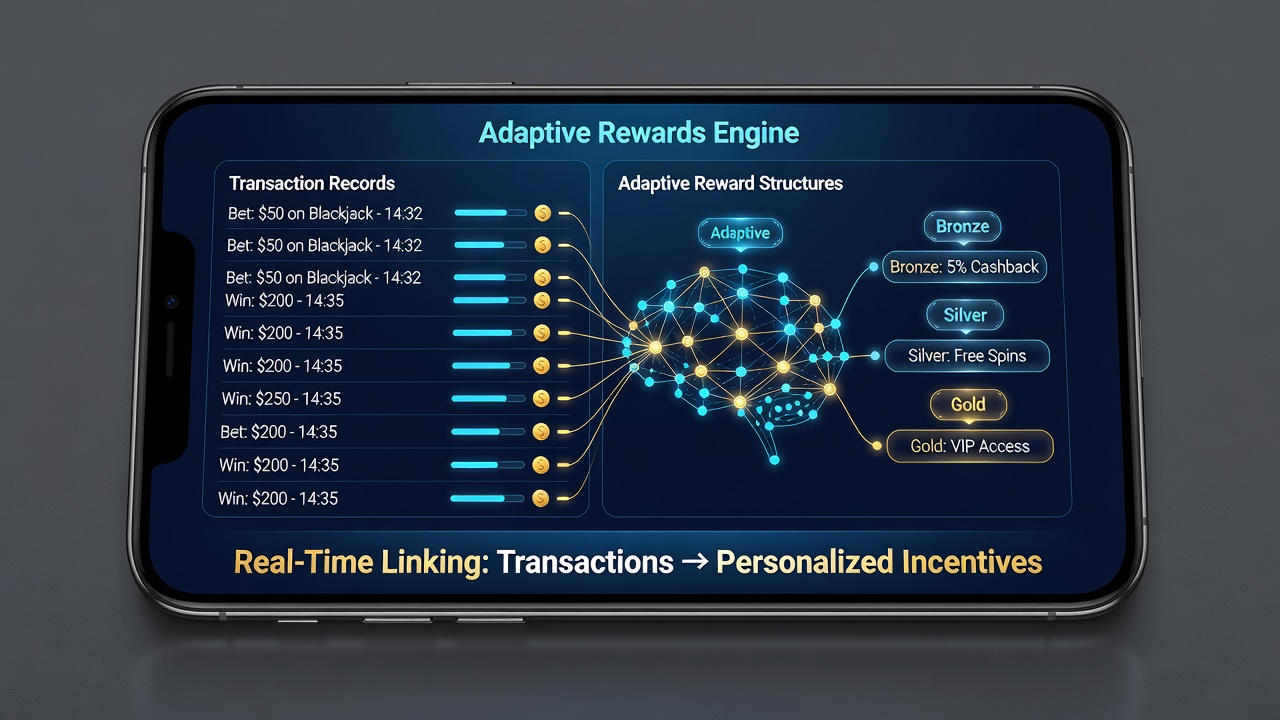
Updates occur through server-side processes that push revised offer parameters back to the user's device during active sessions. The process avoids interrupting gameplay while ensuring that the next interaction reflects the updated status. Data indicates that platforms employing these methods report measurable shifts in average session length following reward modifications.
Implementation Examples Across Regions
One developer in the United States integrated transaction feeds with reward engines to create tiered cashback that scales automatically after cumulative monthly spend reaches preset thresholds. Another operator in Australia applied similar logic to free spin allocations, adjusting quantities based on recent deposit velocity recorded in the system. These approaches rely on the same core principle of continuous data linkage yet differ in the specific metrics prioritized by each market's regulatory environment.
Industry reports from the Nevada Gaming Control Board describe how licensed applications must log every reward adjustment tied to financial activity for compliance verification. Similar requirements appear in documentation from Canadian provincial regulators, where transparency around algorithmic reward changes forms part of ongoing licensing reviews.
Technical Architecture Supporting the Linkage
Backend systems employ application programming interfaces that pull transaction details into scoring modules running on cloud infrastructure. These modules apply weighted variables such as deposit size, game type preference, and time since last activity to generate new reward parameters. Front-end components on smartphones receive only the final offer values, keeping sensitive calculation logic hidden from end users. Engineers emphasize that latency remains under one second for most updates, achieved through optimized database queries and caching layers.
Testing protocols involve simulated transaction streams that verify reward accuracy before live deployment. Teams monitor these tests for consistency across device types and operating systems, ensuring uniform behavior regardless of user hardware.
Regulatory Oversight and Data Governance
Authorities in multiple jurisdictions require operators to demonstrate that reward algorithms treat players consistently according to documented criteria. Documentation must include explanations of how transaction inputs translate into output rewards. The Australian Gambling Research Centre has published summaries of these governance practices, highlighting the need for audit trails that connect every incentive change back to specific financial events. Compliance teams conduct periodic reviews to confirm that systems continue meeting these standards as platforms evolve.
August 2026 saw several operators submit updated technical reports to licensing bodies, detailing refinements made to their linkage processes during the preceding year. These filings emphasize ongoing investment in data infrastructure to support both reward personalization and regulatory reporting demands.
Conclusion
Transaction records and adaptive reward structures in smartphone casino applications function through tightly coupled data pipelines that enable rapid, individualized adjustments. The technical and regulatory frameworks supporting this integration continue to develop as platforms scale and oversight requirements expand. Operators maintain detailed records and testing procedures to ensure that reward modifications remain traceable to verifiable financial activity across all supported devices.